Most AI projects die in the demo. We ship the ones that reach production.
RAG systems, autonomous agents and the platforms around them — built by engineers whose day job is production infrastructure. You can open our work and use it, which is a different claim from a portfolio of prototypes.
Start with a ₹75,000 pilot. Free scoping call, no advance to talk.
Start a project
Usually answered the same day
Hi. Two minutes and we'll come back to you with a fixed quote.
What are you looking to build?
No spam, and we don't sell your details. See our privacy policy.
products delivered
apps live in production
engineering experience
What we do
Three things, and we say no to the rest.
A demo takes a weekend. Something people depend on every day takes retrieval that doesn't drift, payments that reconcile, and a queue that survives a bad Tuesday.
AI systems that stay grounded
RAG, agents, evaluation
Retrieval pipelines over your own documents, agent workflows that run unattended on a schedule, and the evaluation harness that tells you honestly whether either is getting better. Most of the work is not the model.
- Document parsing & retrieval
- Source-bound answers
- Scheduled agent workflows
- Eval harness, not vibes
Products people pay for
Web, iOS and Android
Two-sided marketplaces, learning platforms, subscription products and native apps shipped to both stores — logins, payments, admin panels and the operational tooling nobody demos but staff live in every day.
- Multi-role access
- Payments & subscriptions
- App Store & Play Store
- Built to be handed over
Infrastructure that holds
Scale, reliability, cost
Caching, queues, monitoring and deployments that don't take the product down. This is our day job at scale, and it's the difference between a launch and a business.
- Kafka & Redis
- AWS / GCP
- Monitoring & alerting
- Zero-downtime deploys
Work
Live products, with real users.
Not concepts, and not case studies written after the fact. Several of these have paying customers right now — open them and try them.
AgentsVerse Cloud
Autonomous lead generation for GTM teams
An AI agent that runs every day: it detects newly funded companies, enriches the decision-makers behind them, verifies emails and phone numbers with confidence scoring, and delivers ready-to-contact leads into Slack, email and HubSpot. The hard part isn't the model — it's the pipeline underneath it staying correct and on schedule without anyone watching, and the enrichment being trustworthy enough that a sales team acts on it.
~7,900 companies and 38,500+ verified contacts in the database
PROFLY AI
Adaptive exam platform for pilot training
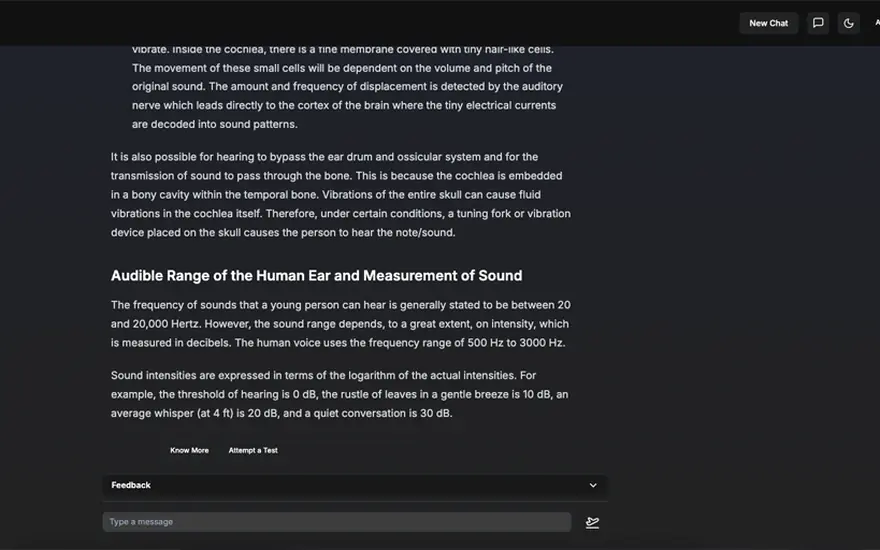
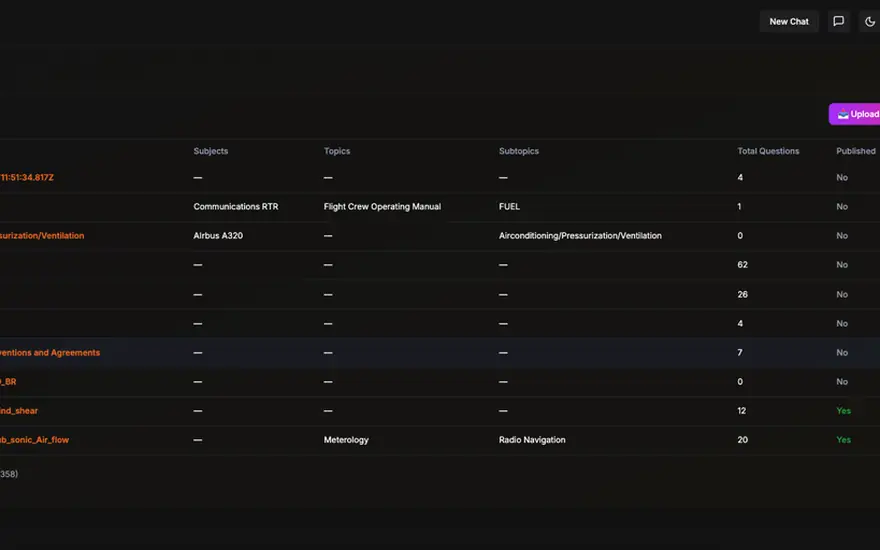
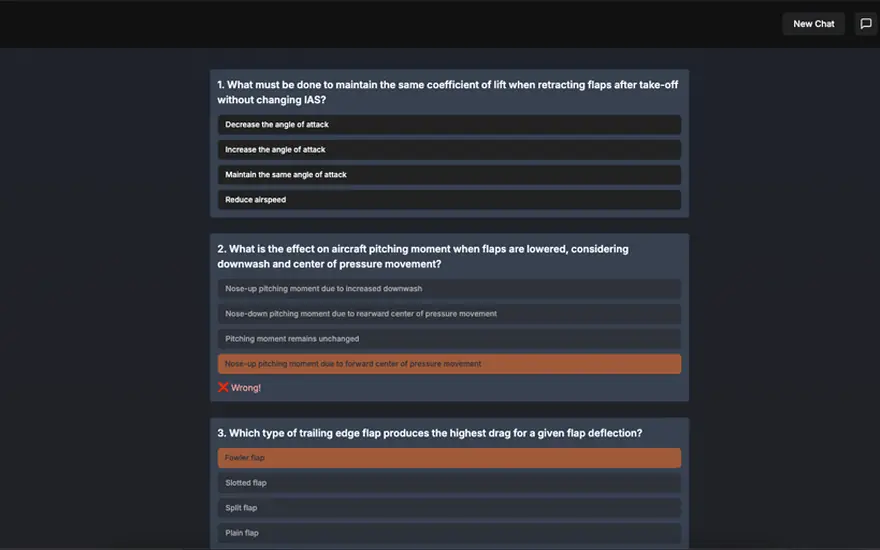
An AI instructor for DGCA, CPL and ATPL candidates, in production for over a year. Built on a full RAG pipeline with a custom PDF parser for aviation manuals, subtopic-scoped retrieval, and a source-bound system prompt so answers stay grounded in real material instead of inventing regulation. Shipped with a custom evaluation harness, because the only way to improve a RAG system honestly is to measure it rather than read a few answers and feel good.
In production 1+ year · 350+ active students · 10,000+ question bank
Adhian Gurus
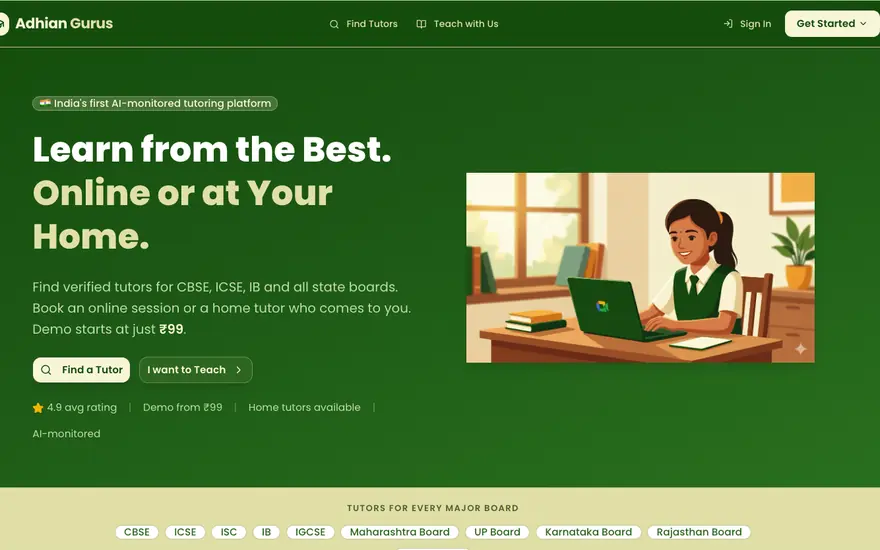
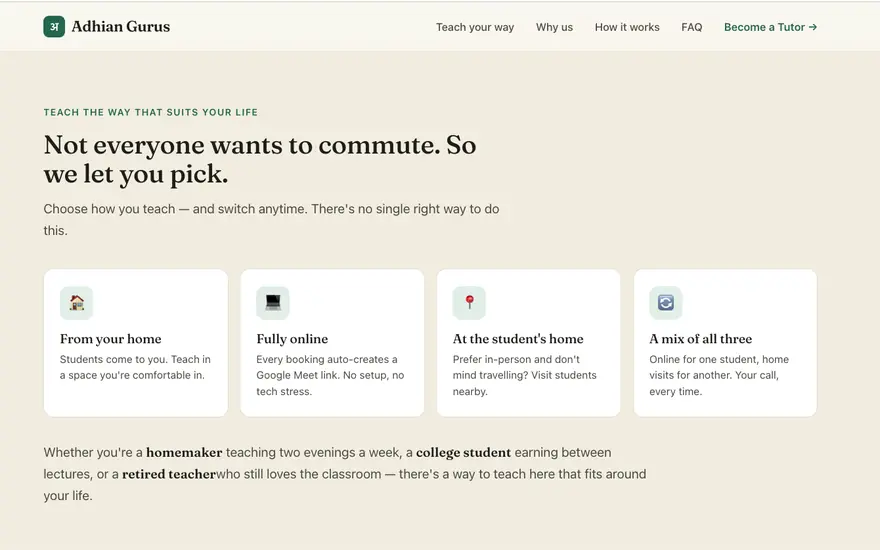
Two-sided tutoring marketplace with an AI safety layer
A live marketplace matching verified tutors with students across CBSE, ICSE, IB and state boards, in online, home-visit and hybrid modes. Includes a paid trial with a credit system, tutor verification and onboarding, and GPT-4 session summaries so parents get topic coverage and homework after every class. Sessions are AI-monitored with consent — a quality and safety layer that's the reason parents trust a stranger in the house.
Live marketplace · 10+ boards · ₹99 trial with credit system
Eclipse
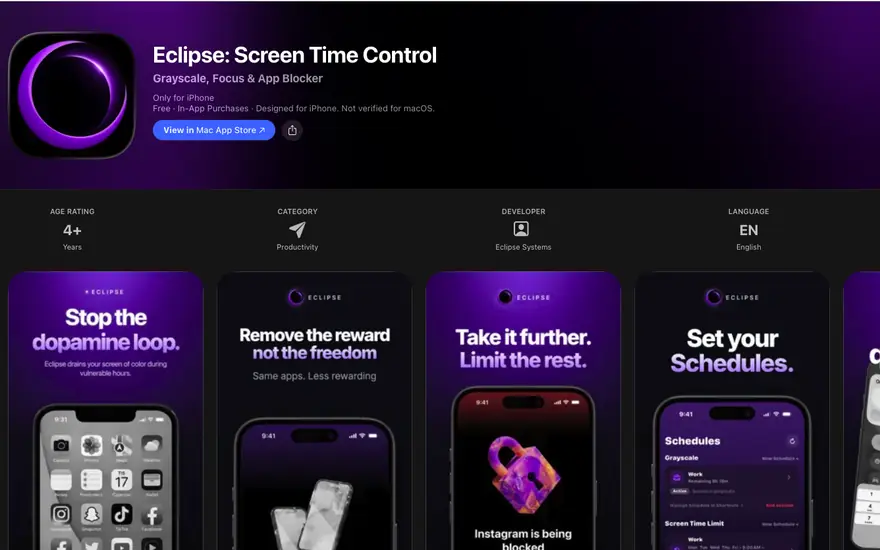
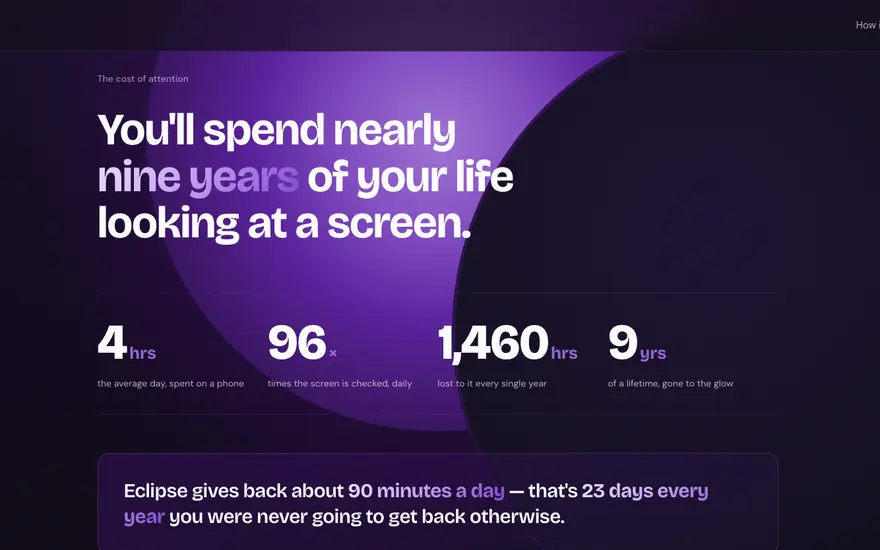
iOS productivity app, live on the App Store
A native iOS app built on Apple's Screen Time framework for scheduled grayscale and app limits, shipping with real subscription pricing. The interesting part is a custom reliability system that checks whether scheduled automations actually fired on time, rather than assuming the feature works because the code exists — on-device scheduling fails quietly, and users only notice when it has already failed.
Live on the App Store with paid subscriptions
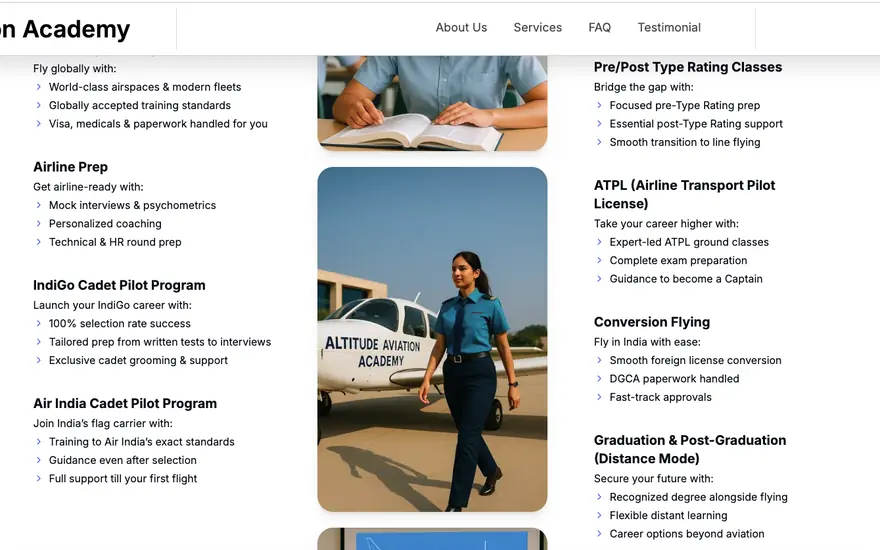
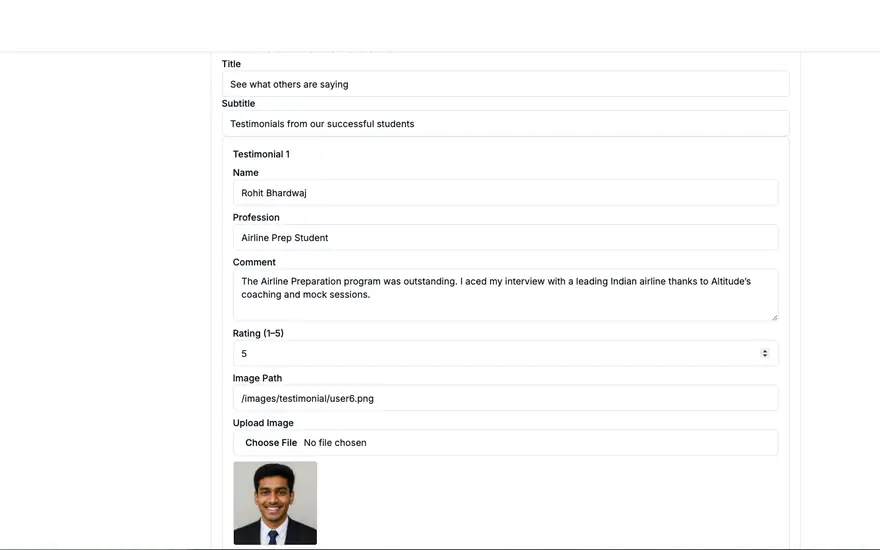
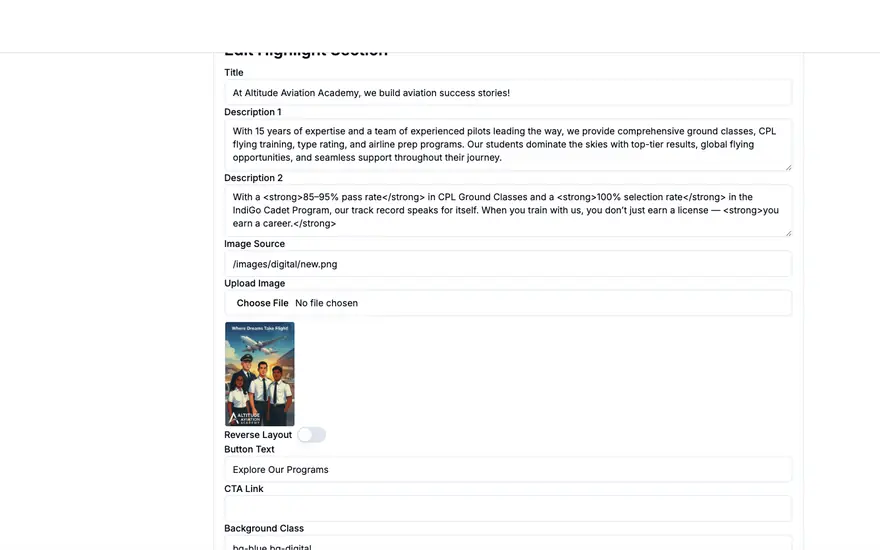
Altitude Aviation Academy
Aviation LMS with integrated CMS
A learning platform for pilot training with Udemy-style course delivery — structured modules, assessments and progress tracking — plus a CMS so the academy publishes and reorders its own material without a developer in the loop. Built for staff who are instructors first and administrators second.
Live platform for a working training academy
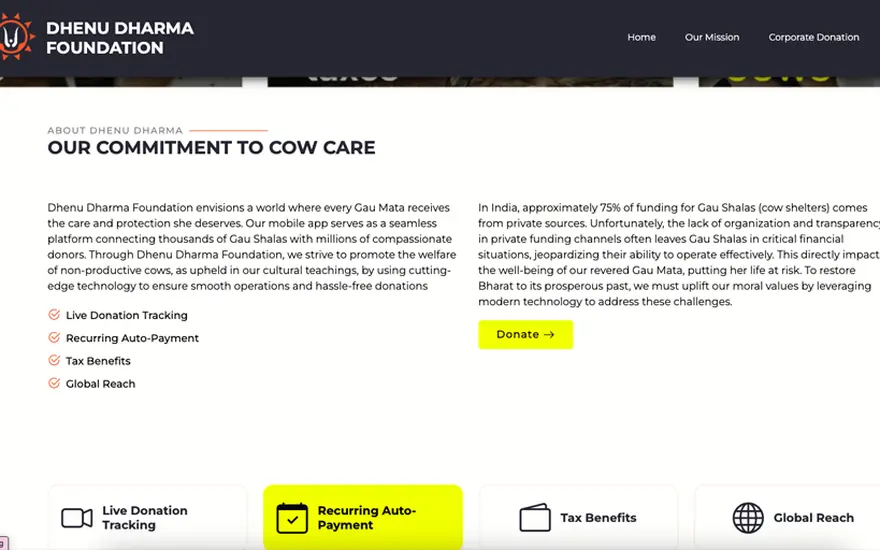
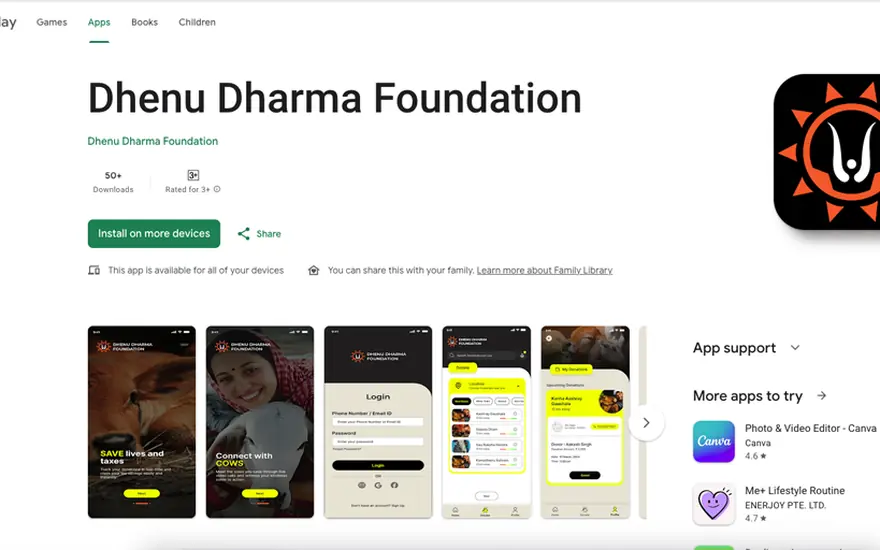
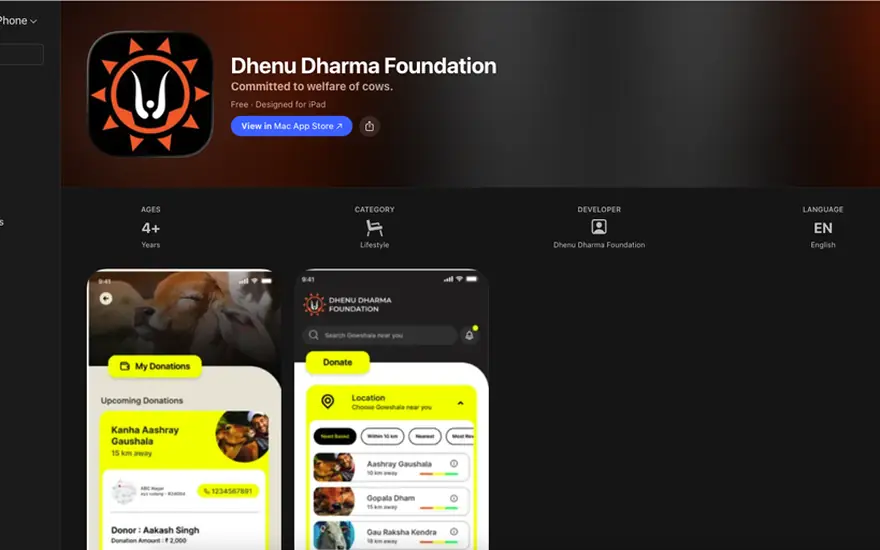
Dhenu Dharma Foundation
Donation app live on Android and iOS
A cross-platform donation app for a cow-welfare foundation, shipped to both stores: UPI payments, recurring giving and reminder notifications. Recurring donations are the entire business model for a foundation, so the engineering that matters is the unglamorous part — payments that reconcile, subscriptions that don't silently lapse, and reminders that arrive without becoming a nuisance. Getting one codebase through both Apple and Google review, with payments, is its own discipline.
Live on Google Play and the App Store
Clients
In their words.
From the people who run the products on this page.
We had already tried an off-the-shelf chatbot and it invented regulations. In aviation training that is worse than having nothing — a student who memorises a confident wrong answer fails the exam and blames you. This one answers from our own material or says it doesn't know. It has been running for over a year now and it is not something I check on any more.
The session summaries turned out to be the feature parents actually care about. They see what was taught and what the homework is without having to chase anyone, and that is what makes them book the following month. We asked for a tutoring marketplace and got something that solved the retention problem underneath it.
Our instructors publish and reorder their own material now. Before this, changing a single module meant emailing a developer and waiting three days for something that took two minutes. Getting that time back was worth the project on its own — everything else was a bonus.
We needed recurring donations that genuinely recur, on both Android and iPhone, with UPI — and we are a foundation, not a technology organisation, so it had to work without us managing it. It shipped to both stores and the payments reconcile every month. Monthly giving has become something we can plan around instead of hope for.
Scheduled automations on iOS fail silently, and we had no way of knowing whether ours were firing. Instead of assuming the feature worked because the code existed, they built a layer that checks. We now find out from our own dashboard rather than from a one-star review, which is the difference between a bug and a refund.
How it works
Four steps. One fixed price.
A short call
What the business does, who uses it, what has to be true for this to be worth it. Free, and there's no deck.
Fixed quote
Exactly what you get, what it costs and when it's live. In writing. The number doesn't move later.
Build in the open
You watch it on a link while it's built. Two rounds of changes included — nobody counts revisions.
Handover
Infrastructure, keys and logins in your name. We show your team how to run it and leave the recordings.
Engagements
Start small. Expand if it works.
You shouldn't have to bet a large budget on engineers you've never worked with. Start with a pilot, see how we work, and decide about the bigger build with evidence instead of a proposal. Every number is fixed before we start.
Pilot
One narrow problem, answered properly in 2–3 weeks — retrieval over a slice of your documents, or a single agent step running unattended, with the evals that show whether it works. Deliberately small, and yours whether or not you continue.
Product build
The platform around the model: multi-role access, payments, admin tooling and monitoring. What turns something that works in a demo into something customers pay for. 6–12 weeks.
Stay shipping
A fixed number of engineering days a month, for teams who have shipped and now need someone who knows the system to keep improving it.
Model usage, hosting and third-party APIs are billed at cost, on your own accounts. We don't mark them up, and you keep the keys.
Questions
Asked before saying yes.
What can ₹75,000 actually get me?+
One narrow thing, done properly — not a small version of a big project. Typically retrieval over a slice of your documents, or a single agent step running unattended, with the evaluation to show whether it holds up. Two to three weeks. It exists so you can find out how we work before committing a real budget, and the work is yours either way. Most people who start here continue; some get what they needed and stop, which is a fine outcome.
Can you prove the AI actually works?+
That's what the evaluation harness is for. We build one for every AI engagement, because the alternative is reading a handful of answers and deciding they feel right — which is how systems ship that fail on the questions nobody tried. You get the harness, so you can keep checking after we're gone.
How do you stop it hallucinating?+
Scoped retrieval and source-bound prompting, so the system answers from your material or says it doesn't know. On PROFLY AI that mattered more than anything else — a confident wrong answer about aviation regulation is worse than no answer, and the same is true in most regulated domains.
How long does it take?+
Two to three weeks for a pilot, six to twelve for a full product. You get a date in the quote before you commit. The usual delay is not engineering — it's access to your data and decisions, so we tell you exactly what we need up front.
Do I own it?+
Completely. Code, infrastructure and API keys are in your name on your accounts, and you get everything at handover. Model and hosting costs are billed at cost, not marked up.
Who actually builds this?+
A small team of working software engineers. Our day-to-day is production backend infrastructure — Kafka, Redis, AWS and GCP, monitoring, zero-downtime deploys — and our own products are live with paying users. That's why the things we build tend to stay up.
Tell us what you're building.
We'll tell you what we'd do, what it costs and how long it takes — before you commit to anything. If it isn't a fit, we'll say so.